A logistics or courier business can process hundreds of deliveries a day. Every single one needs a bill. And while you're dealing with that volume, you also need to know what each van is costing you to run, pay your drivers correctly, and keep corporate clients happy with clean monthly statements. A basic invoicing tool won't cut it.
Most logistics operators end up stitching together a spreadsheet for routes, a separate invoicing tool, and a payroll system that has no idea what route allowances were paid last month. Vendra brings those three things together. Each delivery creates a billable record. Fleet costs go into the books automatically. Driver payroll comes from the same system. No copying data between tools.

What logistics and courier software needs to handle
Logistics is one of the more complex business types to manage on software because revenue, costs, and staffing are all tightly intertwined with individual delivery events:
- Bill each delivery or consignment individually as a service invoice
- Support multiple billing structures: per-package, per-weight, per-route, flat-rate
- Maintain corporate client credit accounts with end-of-period statement billing
- Track fuel, tyres, servicing, and insurance costs per vehicle
- Process driver payroll with base salary plus route-based allowances
- Reconcile cash collected on delivery against outstanding invoices
- Manage inventory or supplies stored across multiple depots
- Apply route-based pricing automatically for different origin-destination pairs
- Generate profitability reports per route, per vehicle, or per client
How Vendra manages a logistics or courier operation
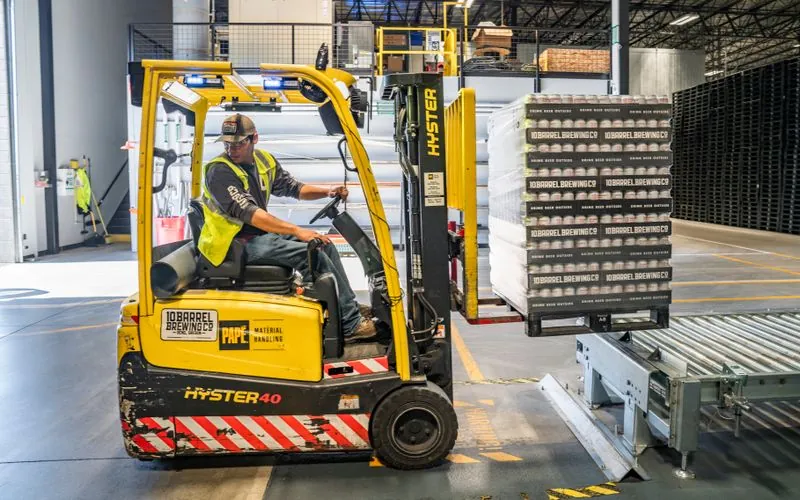
Delivery orders as sales orders with service lines
Each delivery job is created as a sales order in Vendra. The service lines on the order represent the charges for that consignment: base delivery fee, weight surcharge, fuel levy, fragile handling fee, remote area surcharge, or any other billable element your pricing structure includes. When the delivery is completed, the sales order converts to an invoice with one click.
For retail customers paying on delivery, the invoice is settled immediately and the payment is recorded against the order. For corporate accounts billed monthly, invoices accumulate during the period and a consolidated statement is sent at month end. The customer sees a single document with all deliveries listed, and your accounts team has each delivery already recorded as a separate invoice for audit purposes.
Route-based pricing is managed through Vendra's pricelist system. You configure a pricelist per origin-destination pair or per customer tier. When a delivery order is raised for a customer on that pricelist, the correct rate is applied automatically — no manual rate lookup needed.
Corporate credit accounts for business clients
Corporate clients — manufacturers, retailers, e-commerce companies — are set up with credit accounts and payment terms in the accounting module. Deliveries made for these clients are invoiced against their account with the agreed payment terms (Net 30, Net 45, or end-of-month). The aged receivables report shows every corporate client's outstanding balance, broken down by how many days it has been overdue, so the collections team knows exactly who to chase and how urgently.
Fleet cost tracking per vehicle
Each vehicle in the fleet is assigned a cost centre using Vendra's analytic accounts feature. When a driver submits a fuel receipt, a tyre replacement bill, or a routine service invoice through the Expenses module, the expense is categorized and posted to that vehicle's analytic account. At the end of any period, the finance team pulls a cost-per-vehicle report showing total operating expenditure for each truck, van, or motorbike without any manual calculation.
Expense categories
Set up fuel, tyres, servicing, insurance, tolls and driver allowances as separate expense categories. Each one maps to an account so your P&L shows exactly where fleet money goes.
Per-vehicle cost centres
Each vehicle gets its own cost record. You can see what every truck or van is costing you — fuel, repairs, insurance — and compare across the fleet to spot which ones are eating money.
Supplier billing
Fuel station bills and workshop invoices go in as supplier bills. Each one is matched to a vehicle and expense type. Your fleet costs stay accurate without any manual tracking.
Profitability per route
See which routes are making money and which aren't. Vendra compares revenue from a route against the fuel and allowance costs. No separate spreadsheet needed.
Driver payroll with route allowances
The Payroll module manages driver compensation on salary structures that include base pay, route allowances, and any performance incentives. Long-haul drivers receive a higher overnight allowance than local delivery drivers. Drivers on commission per delivery have a salary structure with a variable component tied to their completed delivery count for the period.
Statutory deductions — income tax, social security contributions, pension — are calculated automatically according to the country's rules. Payslips are generated in batch at the end of each pay period, reviewed by the payroll manager, and sent to each driver by email directly from Vendra. Leave records are maintained per driver, and approved leave affects the payable amount for that period automatically.
Cash-on-delivery reconciliation
Cash collected on delivery is a critical control point for any courier business. In Vendra, drivers record each COD collection against the corresponding delivery invoice. At the end of the route or end of the day, the driver submits the total cash collected and it is reconciled against the outstanding invoices assigned to that run. Any gap between expected and actual collections is immediately visible to the operations manager without waiting for a manual end-of-day report.
When the collected cash is deposited, it is recorded in the bank or cash journal and matched against the payments already entered for those invoices. This closes the reconciliation loop without any duplicate data entry.
Multi-depot inventory management
For logistics businesses that hold goods in multiple depot locations — whether company-owned warehouses or third-party fulfillment centers — each depot is configured as a separate warehouse in Vendra's Inventory module. Stock at each location is tracked independently. Transfers between depots are processed as internal inventory transfers, keeping both locations' balances accurate without manual adjustment.
Packaging materials, spare parts for vehicles, and any other physical goods stored at depots are managed with the same inventory tools. Reorder points trigger purchase orders automatically when consumables run low so operations are never interrupted by a shortage of packing tape or motor oil.
Customer pricelists and route-based pricing
Vendra's pricelists allow you to configure different rate cards for different customer segments. A major e-commerce retailer on a volume contract gets a different rate than a one-off sender. International routes have different rates from domestic routes. Fragile or oversize items carry surcharges. All of this is encoded in pricelists so that when a delivery order is raised, the correct price is populated automatically based on the customer, the origin-destination pair, and the service level selected.
Reporting for logistics management
The accounting module gives logistics managers the revenue and cost picture they need at any time. Revenue by client shows which accounts are growing. Cost by vehicle identifies the most expensive units in the fleet. Margin per route shows where to focus pricing negotiations. The aged receivables report flags corporate clients who are slow to pay. None of these reports require manual data export or a separate business intelligence tool — they are built into the accounting module and update in real time.
Which plan does a logistics company need?
Logistics and courier businesses need accounting and payroll — Entrepreneur does not include those. Business at $59/month is the recommended starting point, covering sales order billing, customer credit accounts, expense tracking, payroll and full accounting with advanced reporting. Multi-depot operations or businesses with separate legal entities for different regions need Business Plus at $99/month for up to 5 locations, multi-company setup and consolidated cross-entity reporting.